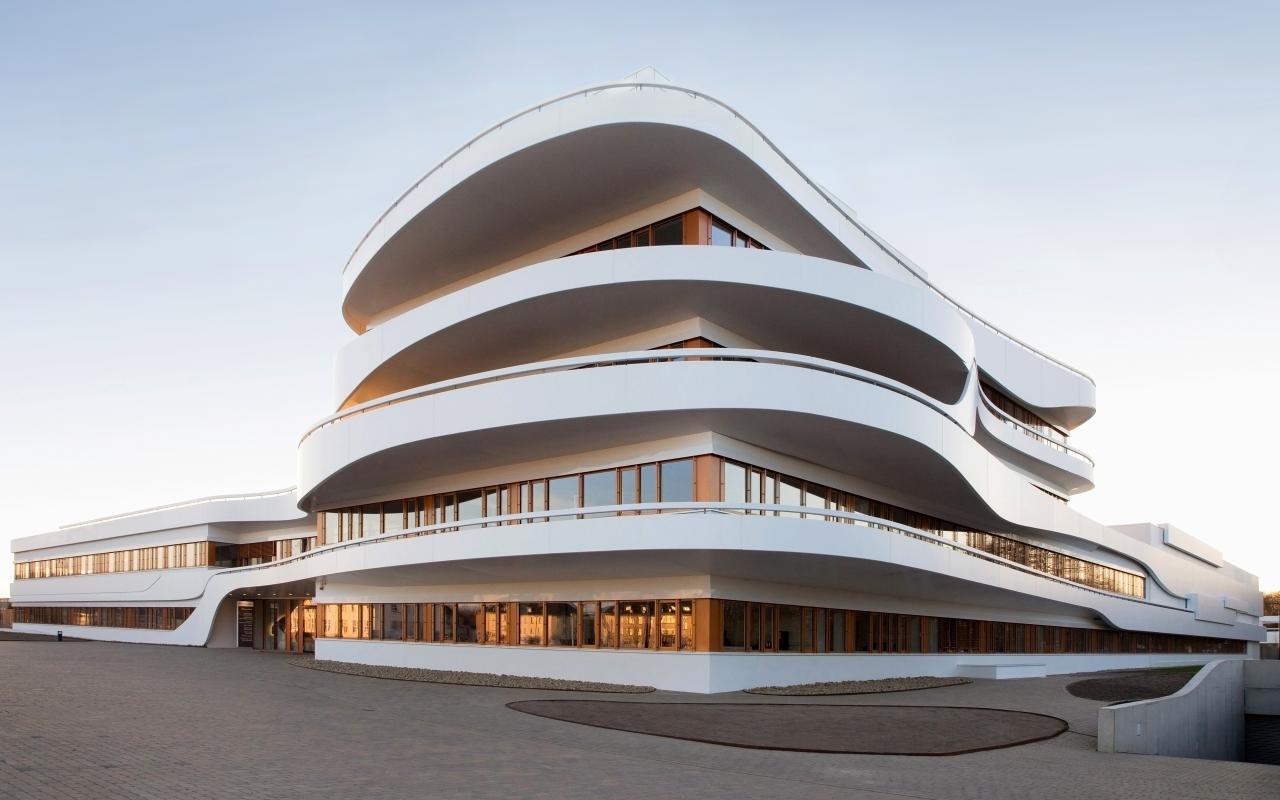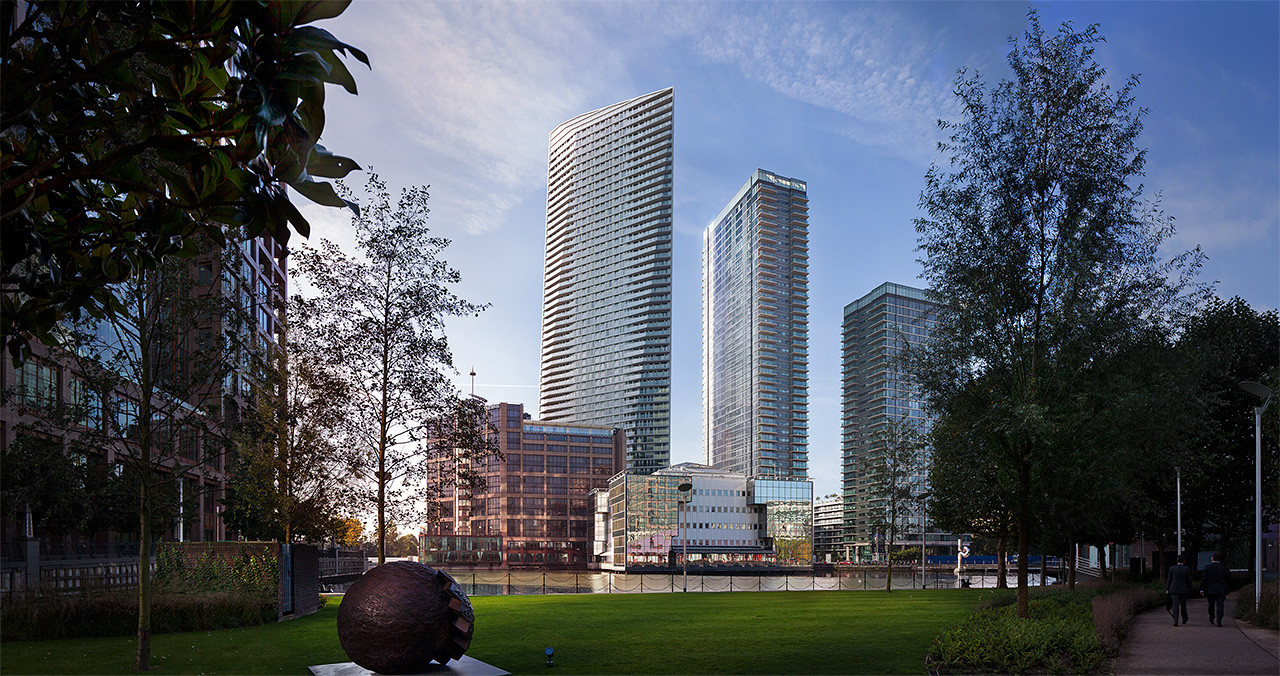
The intersection of architecture and advanced technology has reached a historic turning point as we move deeper into 2026. For decades, architects relied on manual sketches and rigid computer-aided design to bring their visions to life, but those traditional boundaries are rapidly dissolving. We are currently witnessing the birth of Parametricism 2.0, a revolutionary era where artificial intelligence and generative algorithms take center stage in the creative process.
This is not merely about using computers to draw lines faster; it is about using machine intelligence to explore infinite formal possibilities that the human mind could never conceive alone. Artificial intelligence is now capable of analyzing millions of environmental, structural, and aesthetic data points to suggest “living” architectural forms that respond to their surroundings. These new structures often mimic the organic complexity of nature, appearing more like biological organisms than static concrete boxes.
As urban densities increase and climate challenges become more severe, this AI-driven approach offers a path toward more efficient and breathtakingly beautiful cities. By merging human intuition with algorithmic precision, the architectural profession is undergoing its most significant evolution since the invention of the drafting table.
A. The Transition from Classic Parametricism to AI
Parametricism originally emerged as a movement that used mathematical parameters to define the relationships between different parts of a building. In the early days, this required architects to manually write complex scripts and code to create curved or warped surfaces.
With the advent of Parametricism 2.0, the “coding” part is increasingly handled by neural networks. Architects now define the goals—such as maximum sunlight or minimum material waste—and the AI generates thousands of iterations to meet those goals.
A. Classic parametric design was often limited by the computational power available to individual studios.
B. AI-driven design uses “Large Geometric Models” to understand spatial relationships at a granular level.
C. The role of the architect has shifted from being a “drafter” to being a “curator” of algorithmic outputs.
D. Machine learning can predict the structural integrity of a complex form in real-time as it is being designed.
E. This transition allows for much shorter design cycles, moving from concept to construction-ready files in weeks rather than months.
B. Generative Design: The New Logic of Form
Generative design is the cornerstone of the AI architectural revolution. It works by simulating the process of evolution, where the most “fit” designs survive while inefficient ones are discarded.
This logic allows for the creation of “Topology Optimization,” where material is only placed exactly where it is needed for strength. The result is often a bone-like or lattice structure that is incredibly strong yet lightweight.
A. Algorithms can optimize for “Solar Gain,” ensuring that a building stays cool in summer and warm in winter naturally.
B. Generative models can simulate pedestrian flow within a building to eliminate bottlenecks and improve safety.
C. Acoustic performance can be baked into the very shape of a room’s walls through algorithmic wave simulation.
D. Cross-ventilation is no longer a guessing game; AI simulates wind patterns around the building to maximize airflow.
E. The aesthetic results are unique, featuring non-repetitive patterns that give every building a distinct “digital DNA.”
C. Artificial Intelligence as a Structural Engineer
One of the biggest hurdles for complex architectural forms has always been making sure they actually stand up. AI is now capable of performing Finite Element Analysis (FEA) at lightning speed.
This means that an architect can tweak a complex curve, and the AI will immediately show where the stress points are. This real-time feedback loop allows for much more daring designs that push the limits of physics.
A. AI can identify “dead weight” in a structure and suggest where material can be removed without sacrificing safety.
B. Dynamic loading simulations help buildings respond better to earthquakes and high-speed wind events.
C. Self-healing materials are being integrated with AI sensors to monitor a building’s health over decades.
D. Machine learning helps select the best “Hybrid Materials,” such as carbon-fiber reinforced concrete, for specific forms.
E. Virtual reality (VR) environments allow engineers to walk through a “digital twin” of the structure to inspect joints and beams.
D. The Rise of Robot-Assisted Construction
Designing a complex AI form is one thing; building it is another. Traditional construction crews often struggle with the non-standard angles and curves found in Parametricism 2.0.
This is where robotic fabrication comes in. Large-scale 3D printers and robotic arms are now being used on-site to translate digital AI files into physical structures with millimeter precision.
A. 3D concrete printing allows for the creation of hollow, curved walls that save on material and provide better insulation.
B. Robotic arms can weave carbon fiber or timber into complex lattices that would be impossible for human hands.
C. Autonomous drones are being used to “survey” the construction site daily, comparing progress to the AI model.
D. Prefabricated “Modular Units” are designed by AI to fit together like a 3D puzzle, reducing on-site labor time.
E. Laser-guided assembly ensures that every non-standard component is placed exactly where the algorithm intended.
E. Environmental Performance and Biomimicry
Nature has had billions of years to optimize its “architecture,” and AI is finally helping us learn those lessons. Many AI-generated buildings now use “Biomimicry” to solve engineering problems.
For example, a building’s skin might be modeled after the scales of a desert lizard to manage heat. AI can analyze these biological patterns and adapt them to the scale of a skyscraper.
A. “Living Facades” can be designed to capture CO2 or filter rainwater using bio-integrated materials.
B. AI simulates the “Urban Heat Island” effect to ensure new buildings don’t overheat their neighbors.
C. Circularity is prioritized by AI, which tracks the “lifecycle” of every brick and beam from cradle to grave.
D. Passive cooling systems are modeled after termite mounds to maintain a constant temperature without electricity.
E. Carbon-sequestering materials, like hempcrete or cross-laminated timber, are optimized for high-rise use by AI.
F. Personalization: AI Architecture for the Individual

We are moving away from the “one-size-fits-all” approach to housing. AI allows for “Mass Customization,” where an entire neighborhood can be built with the same basic system, but every house is unique.
By inputting their lifestyle data, future residents can have an AI generate a floor plan that fits their specific needs. This brings a level of personalization to architecture that was previously reserved for the ultra-wealthy.
A. Room layouts can be adjusted based on the specific “View Corridors” and privacy needs of the occupant.
B. Accessibility features are baked into the design from the start, rather than being added as an afterthought.
C. Interior lighting is optimized for the specific sleep and work habits of the family living inside.
D. “Kinetic Architecture” allows walls or roofs to move and adapt based on the time of day or the number of people in a room.
E. The “Emotional Resonance” of a space is analyzed by AI to create environments that lower stress and boost happiness.
G. The Data-Driven City: Urban Scale Parametricism
AI isn’t just reshaping individual buildings; it is reshaping entire cities. At the urban scale, Parametricism 2.0 helps planners understand how different buildings interact with each other and the infrastructure.
AI can simulate how a new tower will affect the wind in the street below or how it will impact the local traffic. This leads to cities that feel more like integrated ecosystems than a chaotic collection of structures.
A. “Digital Twins” of entire cities allow planners to test the impact of new developments before they are built.
B. AI optimizes “Micro-Mobility” paths, ensuring that walking and biking are the most efficient ways to travel.
C. Smart grids are integrated into the city’s architectural fabric to share renewable energy between buildings.
D. Urban “Green Corridors” are mapped by AI to maximize biodiversity and reduce the city’s temperature.
E. Emergency response times are improved by designing street layouts that allow for faster navigation.
H. The Ethics and Challenges of AI in Design
With great power comes great responsibility, and AI architecture is not without its controversies. Some critics fear that AI will lead to a “homogenization” of style or the loss of local cultural identity.
There is also the question of “Authorship.” If an AI generates the form, who is the real architect? These philosophical questions are currently being debated in universities and professional firms around the world.
A. Cultural bias in AI training data can lead to buildings that don’t respect local architectural traditions.
B. The “Black Box” nature of some AI models makes it difficult for humans to understand why a certain form was chosen.
C. Job displacement for junior architects and drafters is a significant concern as AI takes over technical tasks.
D. Cybersecurity is a major risk, as a “hacked” design file could lead to structural weaknesses or privacy leaks.
E. Intellectual property laws are struggling to catch up with the concept of “Algorithmic Ownership.”
I. Case Studies: Pioneers of Parametricism 2.0
Several firms are already leading the way in this new era. Zaha Hadid Architects, for example, continues to push the boundaries of AI-driven fluid forms.
Other smaller startups are using AI to build 3D-printed housing communities in developing nations. These projects prove that Parametricism 2.0 is not just for high-end museums, but for solving real-world housing crises.
A. The “Striatus” bridge project used AI to design a 3D-printed masonry structure without mortar or reinforcement.
B. New stadiums are being designed with AI to ensure perfect sightlines for every single one of the 50,000 spectators.
C. Luxury residential towers in Dubai are using AI to create “Twisted” forms that minimize wind resistance.
D. Affordable housing projects in Mexico are using AI to optimize for low-cost, local earth-based materials.
E. Research pavilions at universities like ETH Zurich are testing “Self-Assembling” structures guided by AI.
J. The Aesthetics of the Algorithmic Era
What does an AI-designed world look like? To many, it looks like “Science Fiction,” but to others, it looks like a return to the complex beauty of the Baroque or Gothic eras.
AI forms often feature “Fractal” patterns—shapes that repeat at different scales. This creates a sense of visual richness that modernism, with its flat glass walls, often lacked.
A. “Ornamentation” is making a comeback, but it is functional ornamentation that provides shade or structural support.
B. Smooth, “Curvilinear” surfaces replace sharp corners, creating a more fluid and welcoming urban environment.
C. “Bioluminescent” materials are being integrated into AI facades to provide soft, natural night lighting.
D. The use of “Gradient” colors and textures is made possible by robotic painting and 3D printing.
E. A “New Surrealism” is emerging in architecture, where buildings appear to defy gravity and logic.
K. Skillsets for the Future Architect
The architect of 2026 needs a very different skill set than the architect of 1996. While sketching and spatial thinking are still important, data literacy and “Prompt Engineering” are becoming essential.
Architects must now be part-time data scientists, understanding how to clean and feed data into their design models. They must also be philosophers, able to guide the AI toward ethical and human-centric outcomes.
A. Proficiency in “Visual Programming” languages like Grasshopper or Dynamo is now a basic requirement.
B. Understanding “Machine Learning” basics helps architects troubleshoot why an AI is producing certain results.
C. “Collaborative Design” skills are needed to work with AI as a teammate rather than just a tool.
D. A deep understanding of “Material Science” is required to realize the complex forms generated by the software.
E. Ethics and “Social Impact” training are vital to ensure AI architecture serves everyone, not just the elite.
Conclusion: A New Horizon for Human Creativity

The rise of Parametricism 2.0 does not mean the end of human creativity in architecture.
Instead, it represents a massive expansion of what is possible for our built environment.
We are entering a phase where the most complex problems can be solved through algorithmic elegance.
Our future cities will be more efficient, more sustainable, and more beautiful because of this partnership.
The architect is no longer limited by the strength of their hand or the speed of their mouse.
We are finally able to build in a way that truly reflects the organic complexity of the universe.
The challenges of the 21st century require the high-speed intelligence that only AI can provide.
We must balance this digital power with a deep respect for human history and cultural diversity.
The buildings of tomorrow will be “alive” with data, responding to our every need and emotion.
As we plug the human mind into the power of the algorithm, we unlock the final frontier of design.
The journey into Parametricism 2.0 is just beginning, and the results will be nothing short of miraculous.